
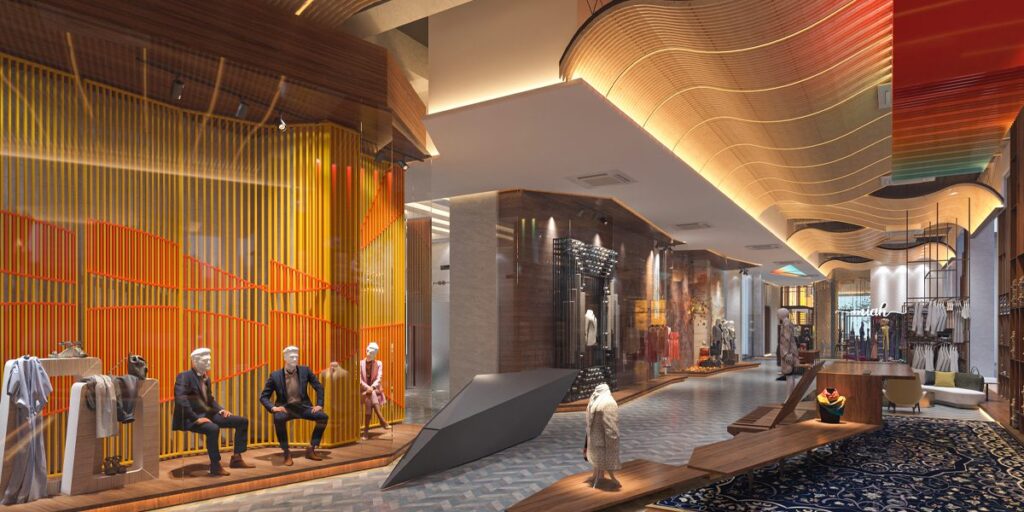
Introduction
Dubai has always been a place with a futuristic perspective, an extravagant lifestyle, and a fashionable retailing culture. The city retail atmosphere is dynamic and highly evolving due to the innovations and changes in the world, and customer demands. The Retail Fit Out Companies in Dubai stand at the leading edge of redefining the interior of the stores that not only appeal to the customers but also are an interpretation of the brand personality, efficiency, and sustainability. Since the integration of intelligent technology to the emphasis on immersive experiences, the new tendencies in the retail fit-outs are transforming the way individuals shop, interact, and relate to brands.
1. Intelligent Technology Implementation
Technology has ceased to be a luxury aspect of contemporary retail design, but has become the basis of an interconnected and customized shopping experience. Smart systems that improve the efficiency of operations and the satisfaction of customers are an adoption that is on the rise in the retail market of Dubai. Digital screens that are interactive and augmented reality (AR) changing rooms, as well as touchless payment systems, are gaining popularity in store design.
Fit-out companies in the retail sector are currently adding sensors and intelligent lighting solutions that can predict the brightness when a customer moves or it is day or night to create a better ambience and save energy in the process. In addition, digital signage enables brands to change promotions live without having to redesign the whole layout. That high-tech upgrade is especially attractive in the Dubai high-tech environment, where customers demand convenience and innovation everywhere.
2. Green and forward-thinking Fit-Outs
One of the strongest trends that affects retail design today is sustainability. The government efforts of environmental sustainability, like the Dubai Clean Energy Strategy 2050, are encouraging businesses to minimize environmental impact.
Recycling of wood, low-VOC paint, LED bulbs, and local materials is used by designers to limit environmental effects. The implementation of green walls, interior planting, and biophilic design principles is also provided to enhance indoor air quality and a natural, relaxing effect. Along with aesthetics, these sustainable practices also appeal to the increasing number of environmentally conscious consumers in Dubai who want a brand that reflects their values.
3. Minimalist and Open Layouts
Gone are the days of too-decorated and congested retail areas. The customers of these days need simplicity, clarity, and functionality. Minimalist design trends are characterized by clear lines and neutral colours, and the open space that customers can move freely without becoming overwhelmed.
The local design teams at the Dubai retail outlets are concentrating on designing open floor plans that promote experimentation and emphasize the main products using low-key lighting and display effects. This is not only making it more visible but also aiding in the increase of customer traffic and making the space more welcoming. The designers achieve the illusion of a larger space by minimizing the decoration and carefully targeting mirrors or glass fences to create the effect of a bigger space, which is particularly required in small boutique shops in the high-end shopping areas of Dubai.
4. Experiential Retail Design
In a digital society where consumers can purchase anything online, the physical stores would have to not only sell but also provide experiences. This has resulted in the emergence of such a trend as experiential retail design that is storytelling, interactive, and emotionally connected.
The fit-out firms of Dubai are creating immersive experiences, which will enable the customers to interact with the brand memorably. Scent branding and background music, virtual product demonstration, and personalized lighting are just some of the features that have been specifically chosen to stimulate emotions and foster loyalty. As an example, premium cosmetic outlets could have beauty advice areas, fashion shops could have digital images or selfie walls to interact with social media. These experiences turn shopping into an experience and not a chore, hence a repeat visit.
5. Merging of Luxury and Usability
The status of Dubai as the capital of luxury in the world requires retail areas that are both luxurious and practical at the same time. The fit-out companies are incorporating luxury materials such as marble, brass, and glass together with practical design elements that maximize the exhibition and storage of products.
Lighting also has an important part in establishing this balance. Product highlighting is done by the use of warm tones and accent lighting without compromising the overall ambience. The furniture and fixtures are being designed to fit the aesthetic of the brand, even with consideration of customer comfort. The outcome is a retail experience that is both luxurious and friendly-to-use- design philosophy, which is entirely in line with the design philosophy of the luxury retailing culture in Dubai.
6. Local and Cultural Design Influences
Dubai has numerous foreign brands; still, local culture is one of the powerful sources of influence in design. The introduction of Arabic-inspired things is now a popular occurrence, enabling the brands to relate better with the heritage of the region.
In contemporary design, geometric motifs, Arabic calligraphic motifs, or Mashrabiya-inspired screens are regularly incorporated by the designers in order to create a blend of tradition and modernity. Warm and natural textures, earthy palettes, and gold elements are added to it to create warmth and authenticity.
7. Adjustable and Customizable Store Designs
The retail design has acquired a new meaning of flexibility, particularly following the global pandemic that changed the way people shop. The stores can change rapidly according to the demand with modular fixtures, portable partitions, and movable shelving solutions. This scalability also favors the use of pop-up stores and temporary installations, as this is rapidly becoming popular in the Dubai malls and shopping festivals. The flexible design will make it durable, and it will save time and money on the Renovation process.
8. Improved Lighting and Ambience
Lighting is an undervalued but very important feature of retail design. The high-end retailing environment in Dubai also employs lighting as a way of influencing emotions and brand identity, as well as space illumination in the market. Fit-out firms are integrating a combination of natural light, ambient LED, and accent lighting in order to provide dynamic visual effects.
Proper lighting choice can be used to make products look more attractive, control the mood of customers, and direct traffic in the store. As an example, soft white lights help establish a very relaxing and classy atmosphere in luxury shops, whereas bright and colorful lights are used in brands targeted at young people.
9. Focus on Customer Comfort
Modern retail areas are not only sales zones, but also networking areas. They are adding comfortable seating, refreshment counters, and rest zones in order to help the customers feel on top of the world. Retailers know that the longer a customer is in-store, the higher the chances he or she will buy.
The fit-out professionals are thus taking into consideration ergonomic design, temperature controls, and soundproofing measures to create a good shopping experience. Such considerations can go a long way in the competitive market of Dubai, where brand loyalty is determined by the experience that customers gain.
10. Hybrid Retail Spaces
Lastly, a more popular activity is the development of hybrid retail spaces, i.e., stores that are based on retail products but with lifestyle experiences. In-store cafes, beauty bars in fashion stores, or art installations in furniture stores are becoming more and more popular. These multipurpose areas can serve the cosmopolitan population of Dubai, and the customers can get not only products but a whole lifestyle.
The combination of retail and hospitality, entertainment, or art brands is enabling community involvement and remaining relevant in a very dynamic business sector.
Conclusion
The retail sector in Dubai is a mixture of sophistication, diversity, and culture. Every emerging trend, such as smart technology, modular design, illustrates the manner in which retail interiors are becoming smarter, interactive, and flexible.
With Dubai already establishing itself as one of the most favoured retail capitals in the world, such innovative trends in design will define the future of shopping in the city over the next several years, making sure that none of the retail spaces present in the city appears incomplete without a distinct touch of the elegance, ambition, and modernity that the city has to offer.
For More Articles, you can visit: https://apartments.org.in/